Ta historia jest dostępna tylko po angielsku.
Import employees: a whole season’s crew, added in one go
Import your seasonal workers from the spreadsheet you already have. Agromigo matches the columns, checks every row, and adds nobody twice.
The season starts on Monday and the agency has sent its list: forty names, email addresses, phone numbers and dates of birth, in a spreadsheet with its own column headings. Typing them in one by one takes an afternoon, and somewhere in that afternoon a date of birth goes in the wrong way round.
Import that list as it is. Agromigo works out which column is which, checks every row before anything is saved, and leaves out anyone who is already there.
In this video
Migo shows you how to add a whole season’s workers at once, from the spreadsheet you already have.
Where it is. Import is in the More options menu at the top of the Employees list, beside Export. Only an administrator sees them.
- Four steps. Import walks you through them, and nothing is saved until the last one. A file can hold up to five thousand rows.
- The file. Choose it, or drop it on the dashed area. A CSV, an Excel workbook, JSON or plain text all work.
- The columns. Agromigo reads them and matches each one to a field. Your own headings are fine, in any language.
- Private by design. Email addresses and phone numbers show only their shape, which is enough to recognise the column.
- Your call. Not the right field? Open the dropdown and pick another, or leave the column out.
- Every row checked. Names, email addresses, dates and roles are checked before anything is saved.
- Nobody twice. A row that would add someone twice is left out, and so is a row with a problem. Each one says what is wrong.
- Import. The ready rows become new workers, active and ready to be planned.
Import the same file again later, and the people already added are recognized and skipped.
Tips
- Keep your own headings. _Voornaam_, _Nachname_ or _First name_: the column is matched either way, and you can change any match.
- One value for everyone. When every row should get the same role or language, set it once under _The same value for every row_ instead of adding a column.
- Fix and import again. Rows with a problem are left out. Correct them in the file and import it once more; the rows already added are recognized and change nothing.
- Update with the same list. Changed a phone number or a role in your spreadsheet? Import it again. Each person is recognized by their email address, and you see every change, old and new, before anything is saved.
- Bank details only on purpose. Citizen service numbers and IBANs are imported only when you tick the box for them on the first step.
- Let them finish their own details. After the import, invite each person to add their photo, signature and identity document on their phone.
Read more
The user guide explains every step, which files work and what is checked. Start with Import and export, then Employees for what happens to a record after it is added.
Try it free for 1 month.
Więcej historii
-
No repair forgotten, from the first photo to the fix
Your workers see damage first. With Agromigo they report it in a WhatsApp chat, and you see every open repair on one list and one map.
-
 4 min
Issues: from a WhatsApp photo to a finished repair
A worker reports torn netting with one photo on WhatsApp. The technician is notified, takes the repair on, finds it on the map and resolves it, and you see every repair that is still open.
-
 1 min
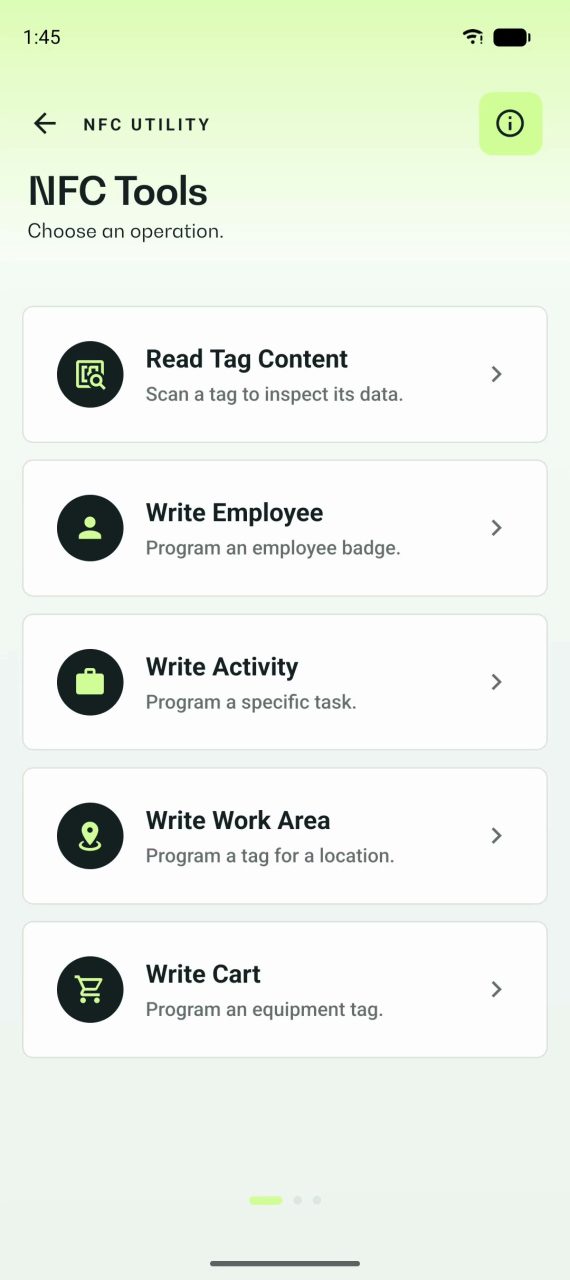
Read Tag Content: see which crops stood on a row, and when
Read a row's tag with the Agromigo Admin app and see every crop that stood on that row, with its dates, right where you stand.