API machine users: connect your systems without sharing a password
Give your payroll or climate system its own Agromigo account: data through the API, only the access it needs, and alerts that reach the right person.
Your payroll package needs approved hours. Your climate computer wants the same data. The quick fix is to hand over someone’s login. Then that person leaves, the connection breaks, and the records say they did things they never did.
Agromigo gives each system an account of its own, on the Machine Users screen. It signs in as itself, sees only what you allow, and can be switched off without touching anything else. Your data reaches the tools you already use, and you stay in control of every connection.
In this video
Migo shows you how to give another system its own account, with only the access it needs.
The list. Machine Users lists the accounts your other systems sign in with, one row each; a dot marks one that needs attention. Select a row, and its record opens beside the list. A climate computer or payroll system gets an account of its own, never a person’s login, so you decide exactly what each system can reach through the API.
- Your API machine user. MU-1 is the machine user your systems connect with through the API: its record sits beside the list (from the bottom on a phone). It is active and may read data from every site.
- The Next steps card. At the top of the record: without a security contact, credential and access alerts reach nobody at all.
- Details. The card just below lists the security contact, its type and its sites. Anything nobody has filled in shows a dash.
- Edit. The pencil at the top right opens the edit sheet, in cards: basic data, what it can do, the sites the system may see, and a description.
- Description. The last card is where you note which system uses this account and who looks after it.
- Nothing saved. Cancel, at the bottom right of the sheet, closes it and leaves the machine user exactly as it was.
- A new machine user. New, in the top right corner, opens a menu with Machine user (API) and Machine user (BI). Machine user (API) opens the same sheet, empty, starting with the Basic Data card. Once you save a new one, its secret key shows just once, so copy it straight away.
- API Portal. Open API Portal, in the top right corner beside New (in the three-dot menu on a phone), opens the API reference your system supplier needs to connect.
- Every kind of record. Down the left (behind the menu at the top left on a phone) is every kind of record a system can reach, from sites and crop cycles to employees, each with its own requests.
- The key. Authentication, on the right, is where your supplier pastes the machine user’s secret key. Every request needs one.
- A request. Each request, such as List sites, explains what it returns and shows a ready-made example, so your supplier can connect without guesswork.
- The employee list. Open the employees group and choose List employees: the request that returns your people, with every filter it accepts.
- Test Request. The Test Request button tries a request right in the reference. Your organization is already filled in, so there is nothing to look up first.
- Active employees, five at a time. Tick the status filter and set the page size to five. Send returns the first five active employees, each with their name and status, and a link that fetches the next five.
Your operation’s data flows safely to the tools you already use, each system on its own account with only the access it needs.
Tips
- Fill in the security contact. That person is told when a key is issued, revoked or suspected of having leaked. It does not have to be someone in your team; your supplier’s operations contact is often the right choice.
- Choose the sites on purpose. "Every site" is the default, and a system limited to one site gets nothing at all from another.
- An API machine user is not a BI machine user. You choose the kind in the New menu, once: a Machine user (BI) is for a reporting tool such as Power BI, and has no What it can do card. That has its own story.
- Copy the secret key straight away. The key is shown once, when the account is created, and nobody can retrieve it later, not even Agromigo. Lost it? Choose Rotate Secret Key on the Details card. The old key keeps working for one more minute, so a running connection is not cut off.
To withdraw access, set the account inactive on the Machine Users screen. Its keys stop working, and the record of what it did stays in place.
Read more
The user guide explains what these system accounts can do and how to set them up safely. Read Machine users, then Access and scope for the two kinds, site scope and the secret key. The public API and the API Portal sets out every request, filter and limit.
Want to see more? Watch the other stories.
More stories
-
No repair forgotten, from the first photo to the fix
Your workers see damage first. With Agromigo they report it in a WhatsApp chat, and you see every open repair on one list and one map.
-
 4 min
Issues: from a WhatsApp photo to a finished repair
A worker reports torn netting with one photo on WhatsApp. The technician is notified, takes the repair on, finds it on the map and resolves it, and you see every repair that is still open.
-
 1 min
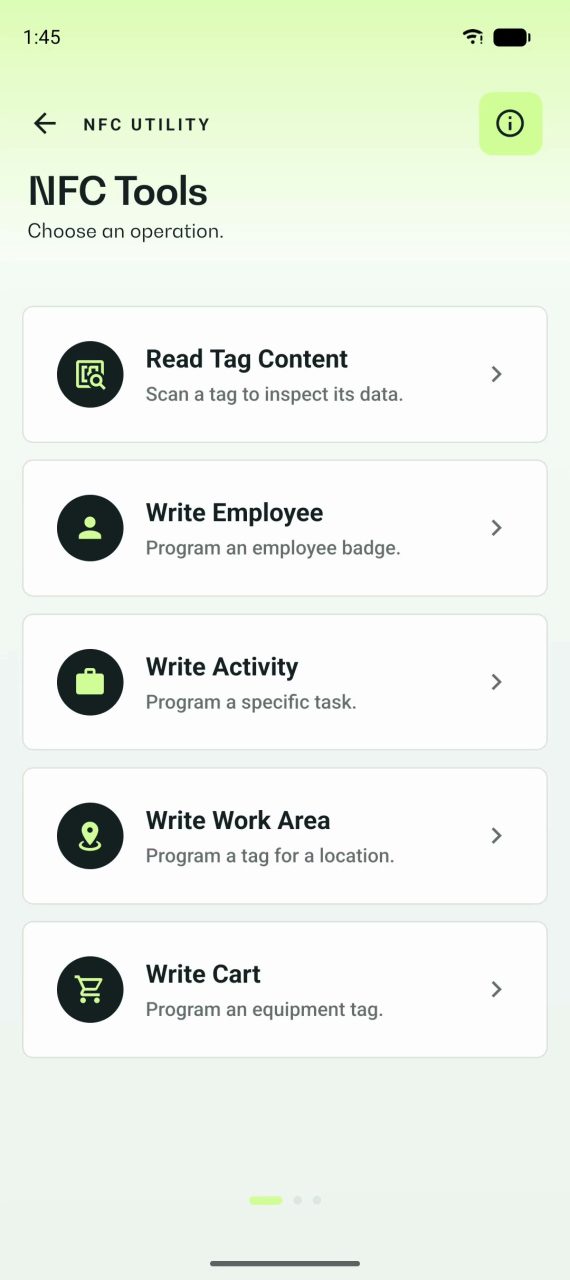
Read Tag Content: see which crops stood on a row, and when
Read a row's tag with the Agromigo Admin app and see every crop that stood on that row, with its dates, right where you stand.